IVA ŠINTIĆ

↠ MENU

WORKS

ABOUT

contact

IVA ŠINTIĆ

WORKS
ABOUT
CONTACT
UPCOMING EXHIBITION:

Invisible Forces / Visible Traces

Heiner Franzen – Germaine Sijstermans – Iva Šintić

Städtische Galerie Stapflehus Weil am Rhein
12.06. – 26.07.2026 – https://www.kunstverein-weil.de/kunstverein

PUBLICATIONS:
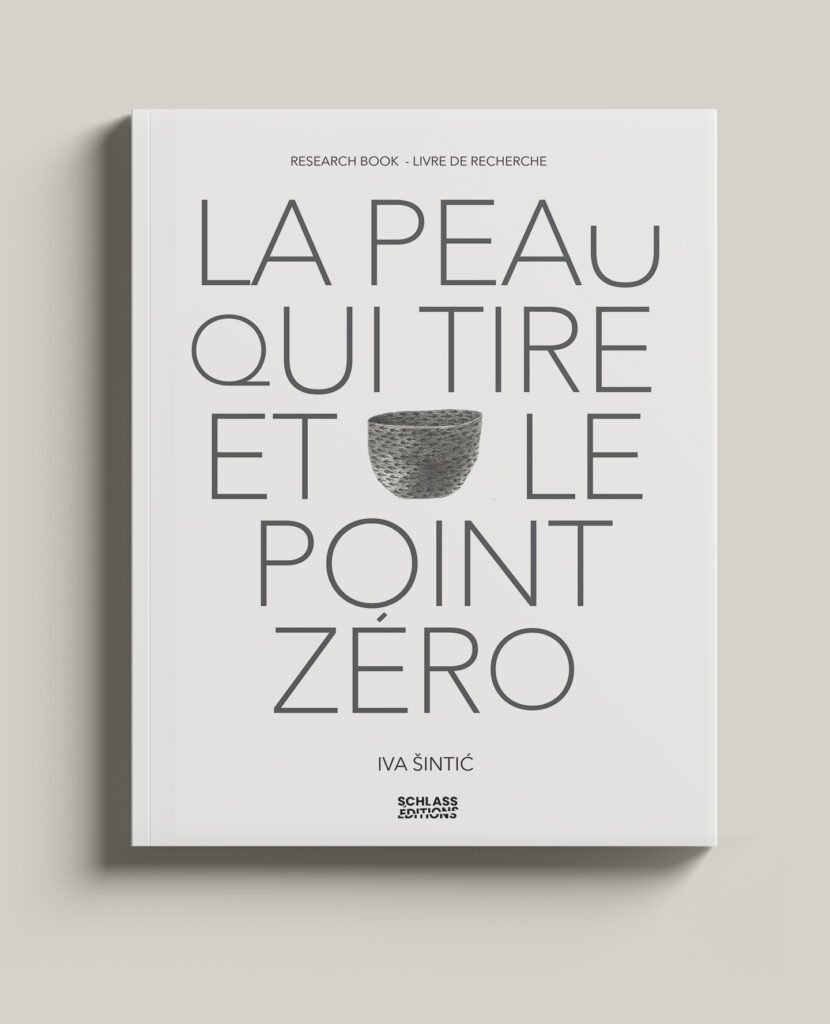
POINT ZERO
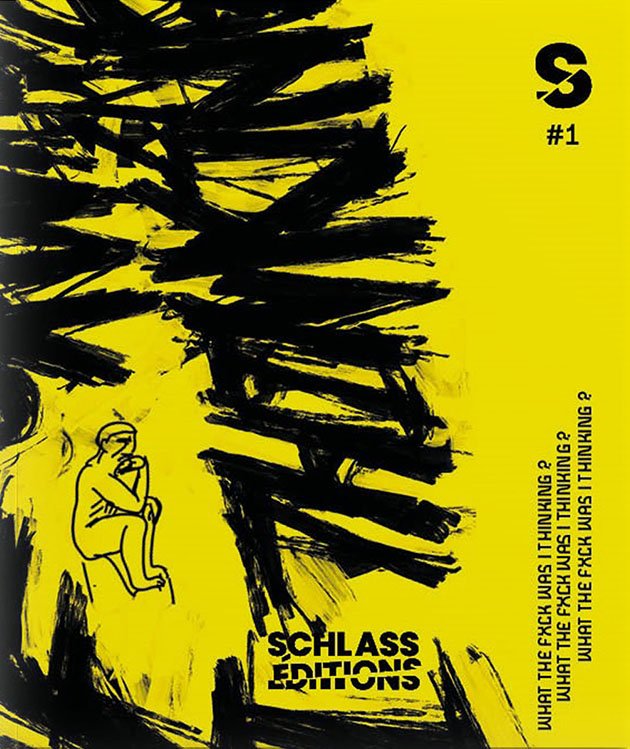
WTF #1
LE TEMPS S’ENFUIT SANS DISPARAITRE

EN


Le Labo Bartho, Museum Bartholdi

Artist residency: Iva Šintić, Simon Burkhalter
18.11.2022 – 31.12.2023

The project presented at the Museum’s temporary gallery is a result of a one-month residency by two artists: Iva Šintić and Simon Burkhalter. The residency is formulated as a work-in-progress laboratory that takes its form around experimentation with different historic tools used in sculpting processes. The two artists use and experiment with the forms of the tools to achieve the different sizes of the objects. By manipulating the size of the objects, they manipulate the sense of space that surrounds us.

FR

Le Labo Bartho, Musée Bartholdi


Résidence d’artiste : Iva Šintić, Simon Burkhalter

18.11.2022 – 31.12.2023 

Le projet présenté à la galerie temporaire du Musée est le résultat d’une résidence d’un mois de deux artistes locaux : Iva Šintić et Simon Burkhalter. La résidence est formulée comme un laboratoire de travail en cours qui prend sa forme autour de la experimentation avec différents outils historiques utilisés dans les processus de sculpture. Les deux artistes utilisent et expérimentent les formes des outils pour réaliser les différentes tailles des objets. En manipulant la taille des objets, ils manipulent la sensation d’espace qui nous entoure.

Le temps s’enfuit sans disparaître

Mulhouse
0→221

Un livre d’artiste édité à 200 exemplaires produit par La Filature pour la 14e édition de la biennale de la jeune création contemporaine 
Déployer ce carnet est une manière d’explorer les affinités qui lient entre elles les représentations de la nature de Cassandre Fournet, Emmanuel Henninger, Iva Šintić et Gaëtane Verbruggen, aux divers points de vue de leurs rapports au temps, à la photographie, au dessin et à la peinture. Les images se plient, se déplient et se replient dans un acte de poser une absence ou celui de révéler un instant du monde. Elles sont une ouverture à un double horizon de passé et d’avenir imaginaire. En se donnant à voir, elles sauvent le passé de son anéantissement ; dans leur correspondance les unes avec les autres, elles suggèrent de nouvelles narrations spéculatives sur les liens qui unissent les corps à la nature. Les intérieurs, les paysages urbains, sylvestres ou célestes sont autour des quatre artistes comme des mondes vers lesquels ils se projettent. Pour les capturer, il leur revient de les découvrir et pour les découvrir d’en être intérieurement submergés. Perceptible dans les représentations qu’ils en produisent, leur ressenti nous laisse l’impression d’avoir vus ces choses de nos propres yeux.
Dessins : Cassandre Fournet, Emmanuel Henninger, Iva Šintić, Gaëtane Verbruggen
Conception graphique : Julie Wittich
Texte : Emmanuelle Walter, responsable arts visuels de La Filature

WTF was I thinking #1

0→225
“WTF was I thinking” is a magazine, a collaborative publication dedicated to those moments of creative uncertainty; a space where we can celebrate chaos, uncertainty, and all those ideas that, in the moment, seem revolutionary… or completely absurd.
With : Marie Freudenreich, Shohyung Park, Louis Fouilleux, Audrey Pouliquen, Iva Šintić, Vincent Campos, Matthias Knoblauch, Jacques Lopez, Julie Wittich, Nahrae Lee, Emmanuel Henninger, Simon Burkhalter
Full title: WTF was I thinking #1
Publication type: Annual magazine
Year of publication: 2025
Format: 24 x 20 cm
Number of pages: 80
Printing techniques: Screen-printed
cover, digitally printed pages
Language: English and French
ISBN: 979-10-977346-0-2
Retail price: €18

La peau qui tire et le point zéro

0→225
Full title: La peau qui tire et le point zéro
Publication type: Research book / artist’s book
Publication year: 2025
Format: 25 x 19 cm
Number of pages: 118
Printing techniques: Screen-printed
cover, digitally printed pages
Language: English and French
Collection: LABORA
ISBN: 979-10-977346-1-9
Retail price: €32

CONTEXT

Last year, 2020, I spent for the first time in France without the option of going to Croatia. From March to May, during the first Covid lockdown, we left the house once a day, usually for a walk in the yard, where, like guinea pigs in a cage, we would circle on the 10-metre path to the other side of the garden, from wall to wall. For the second winter lockdown of the same year, we were granted the right to work in the studio. As self-employed, this time we had the right to write “permissions” for ourselves, stating that we could not continue working from home. All events, public and private, in our collective studio were interrupted. Only occasionally would we meet colleagues in the corridor, covered with masks, exchange a few words and close ourselves again in our respective rooms.

I returned to the project Half-half. The redesign of the toothbrush for 2020. Simon and I spent all our time together. I watched how we moved through the flat, trying to pass each other in the corridor, just large enough for one person, and how we spun around the rooms of our small flat. I imagined that we should be wearing sensors, like cats whose movements owners try to record, and that our path from the bathroom to the bed, from the sofa to the kitchen, to the end of the long garden and the furthest path, to the shop, could be traced. I imagined two lines intertwining in space, moments where they touch, moments where they diverge.

I try to define space. I sense when we become nervous, when we forget that the other is somewhere nearby, hidden in front of a screen with headphones, when we still seek time for shared activities. Through the flat’s window, I listen to the neighbours and to the situations unfolding behind closed doors as a result of forced togetherness. Unfortunately, not all stories are positive like ours. In Europe, during the first and second waves of lockdown, domestic violence in some countries rose to unimaginable proportions, while in Croatia, criticism emerged regarding the lack of information and, therefore, lack of support.

We are currently constructing a new studio. Within the same building, we are exchanging 60 m² for approximately 180 m². We are constructing smaller rooms on two floors and dividing the space. Between our newly built studios, we will put a wall: you play here, and I play here

OBJECT

I reflect on the redesign of the toothbrush for 2020. The toothbrush for two is an absurd object, created as a by-product of failed attempts to define space. The toothbrush is an intimate object that, when shared by two people, places them in a position of intimacy at a level we are often not prepared to accept. In this case, it becomes a symbol whose meaning lies in the relations between individuals, space, and culture.

The toothbrush, as a symbol, is nothing more than a tool that allows me to speak about seemingly abstract elements through a physical object. Its value lies in the symbolism and in the process, rather than in the finished, absurd product. I decided not to produce any of the models, but to present them exclusively digitally, in accordance with the current condition of gallery exhibitions.

In the previous production of works related to this project, I have dealt with the object and with the idea carried by the object. My interest lies in the definition of space and in the way we share and experience it. Through the redesign of this everyday object, I attempt to define spaces, relations, and movements.